
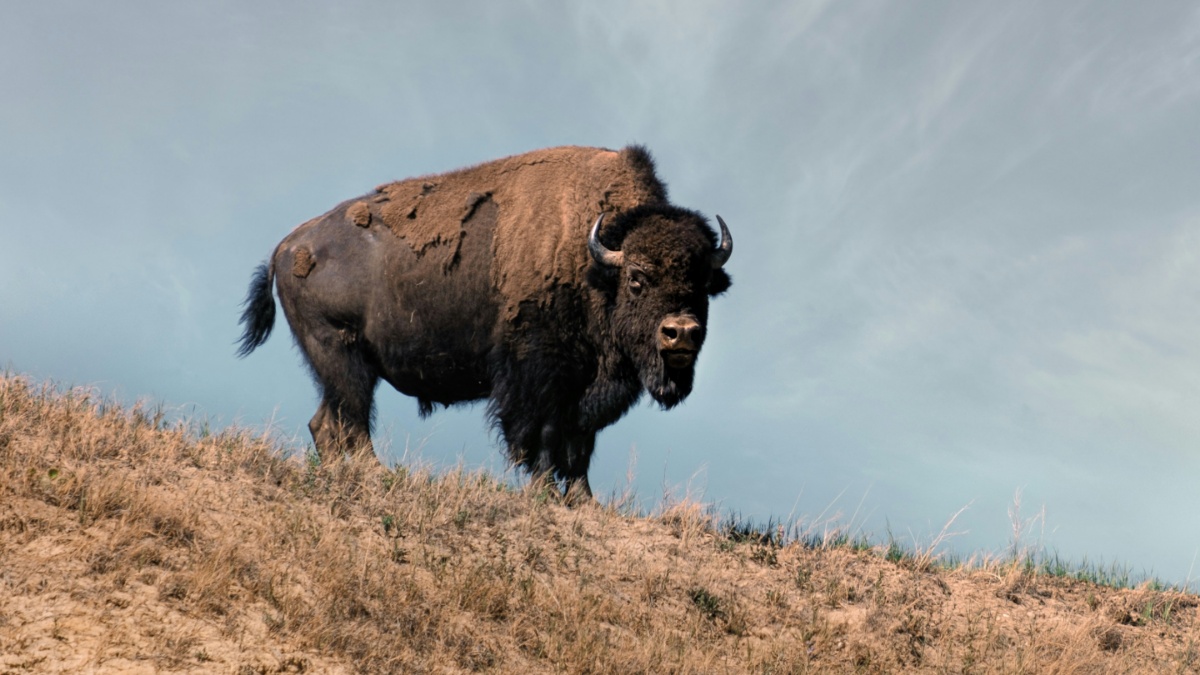

MAMMOTH HOT SPRINGS, Wyo. — A 12-year-old visitor was hospitalized Friday morning following a dangerous wildlife encounter with a Wyoming bison inside Yellowstone National Park. The incident has prompted federal park rangers and public safety teams to reissue urgent warnings regarding wildlife proximity regulations as peak summer tourism causes human-wildlife boundaries to intersect.
The sudden encounter transpired at approximately 9:15 a.m. near the Mud Volcano thermal area, located just north of the Fishing Bridge hub. According to an official administrative statement released by the National Park Service (NPS), park emergency medical personnel responded immediately to the scene to administer first aid.
Due to the nature of the injuries sustained, the juvenile patient was emergency-transported via ambulance to a nearby regional hospital for advanced treatment. The specific medical status of the individual has not been publicly disclosed, and park public affairs officials confirmed that the incident remains under active investigation.
The Physiological Mechanics of Bison Defense Mechanisms
While many tourists mistakenly perceive bison as slow, docile animals resembling domestic cattle, wildlife biologists emphasize that they are highly volatile, territorial megafauna that aggressively defend their personal space when crowded.
According to biological tracking profiles compiled by the U.S. Department of the Interior, male bison can weigh up to 2,000 pounds and possess immense muscular acceleration.
Despite their massive bulk, a mature bison can sprint at speeds up to 35 miles per hour, roughly three times faster than an average human, and can pivot instantly to launch an intruder using their curved horns. National Park Service data confirms that bison have injured more visitors within Yellowstone’s borders than any other native animal, including grizzly bears and wolves.
The dangerous nature of these encounters often intensifies near highly frequented boardwalk zones like Mud Volcano, where geothermal features naturally attract wildlife looking for warmth, inadvertently narrowing the physical gap between animals and foot traffic.
Federal Wildlife Distance Regulations and Enforcement
To mitigate severe injury rates and protect native ecosystems, the federal government enforces strict statutory safety perimeters that all visitors are legally obligated to maintain while navigating public lands.
Under active National Park Service Safety Regulations, visitors must remain at an absolute minimum distance of 25 yards (75 feet) away from all large mammalian wildlife, including bison, elk, bighorn sheep, deer, moose, and coyotes. For large apex predators such as bears, wolves, and cougars, that mandatory safety buffer extends to at least 100 yards (300 feet).
“Wild animals can be aggressive when people do not respect their space,” Yellowstone public safety monitors emphasized in their official briefing following the Wyoming. Rangers stress that if an animal intentionally alters its path or approaches a human path, visitors must immediately back away to maintain the required legal baseline.
Approaching, feeding, crowding, or attempting to touch park wildlife is strictly prohibited under federal code, and individuals found in violation face heavy monetary fines or potential federal misdemeanor charges.