
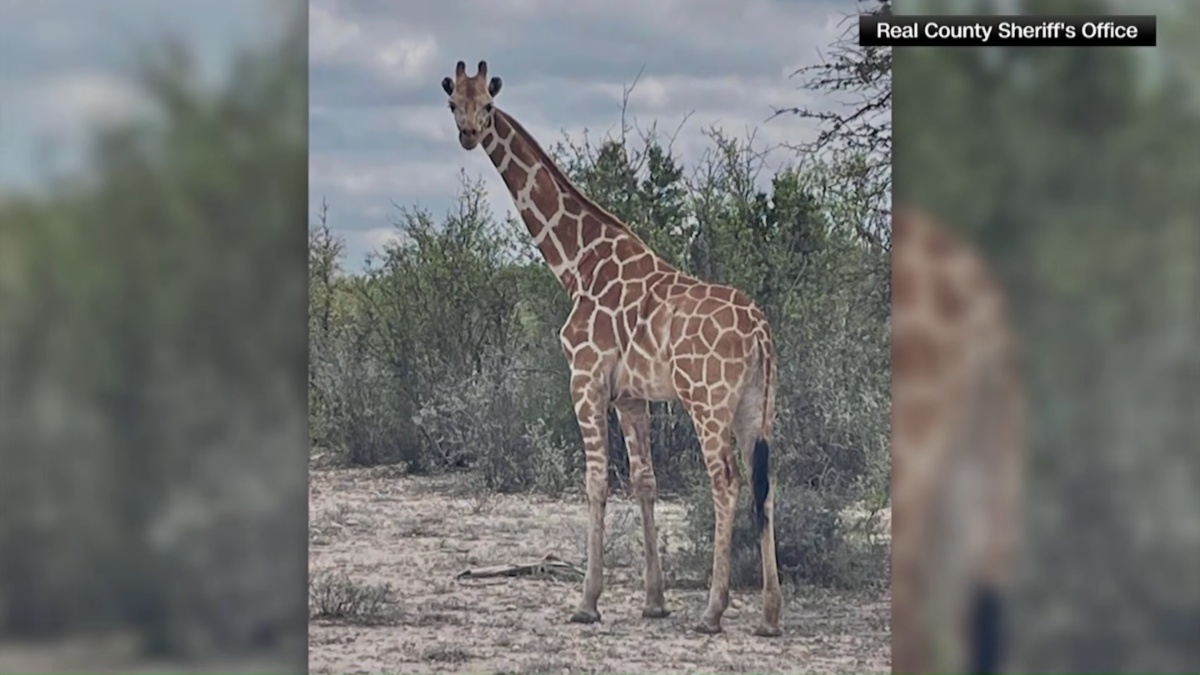

KERRVILLE, Texas — A complex, multi-day tracking operation across the rugged landscape of the Texas Hill Country has concluded successfully following the safe containment and recovery of an escaped giraffe. The exotic animal, a two-year-old female named Gracie, slipped her containment infrastructure earlier in the week, triggering localized safety alerts and mobilizing coordinated tracking teams consisting of local handlers, drone operators, and regional wildlife enthusiasts.
The successful recovery operation concludes an intense regional search that highlighted the unique logistical challenges of tracking large, non-native megafauna through dense Texas brush and rocky terrain.
According to situational tracking briefs originally reported by CBS affiliate KENS 5 San Antonio, the animal managed to breach her containment area on a private ranch located between Comfort and Kerrville.
Despite her immense physical stature, the juvenile giraffe proved highly elusive, utilizing the dense regional tree canopy to evade thermal drone detection and search groups for multiple days before specialized tracking teams safely intercepted her.
Logistical Framework of Megafauna Capture Protocols
Capturing an escaped animal of Gracie’s proportions requires highly specialized biological oversight to ensure the safety of both the public and the animal. Unlike standard livestock tracking, megafauna recovery cannot rely on aggressive physical herding or traditional lasso mechanisms, which carry severe skeletal fracture risks for animals with elongated necks and fragile limbs.
Wildlife handlers involved in the containment process emphasized that recovery protocols rely heavily on patience, visual tracking, and establishing secure food bait perimeters.
Because giraffes are highly susceptible to capture myopathy, a dangerous, often fatal metabolic condition triggered by extreme physical stress and overexertion during pursuit, containment teams had to monitor her from a distance, slowly guiding her into a secure transport trailer using favored nutritional attractants once she entered a clearing.
The Regulatory Environment of Texas Exotic Wildlife Ownership
The highly publicized search has renewed focus on the unique statutory frameworks governing private exotic animal ownership across the Lone Star State.
According to administrative guidelines established by the Texas Parks and Wildlife Department (TPWD), Texas maintains a distinct regulatory approach to non-native wildlife compared to neighboring states. Under current state statutes, non-indigenous exotic species, including giraffes, antelopes, and ostriches, are legally classified as private livestock rather than protected game animals.
Consequently, the state does not require a specialized, restrictive wildlife permit to own or house these animals, provided they are kept securely on private property and do not cross into public roadways or state-managed territories.
While the state level grants vast private property animal rights, individual counties frequently enact strict guidelines regarding enclosure height, emergency escape notification plans, and liability insurance minimums to shield rural communities from the economic and safety hazards of loose exotic herds.
Following a thorough veterinary evaluation, ranch managers confirmed that Gracie suffered no physical injuries during her multi-day excursion and has safely reintegrated into her standard containment environment.
Local animal advocates are utilizing the resolution to urge exotic property owners across Central Texas to proactively audit their physical fencing and electronic gate security ahead of peak storm seasons.