
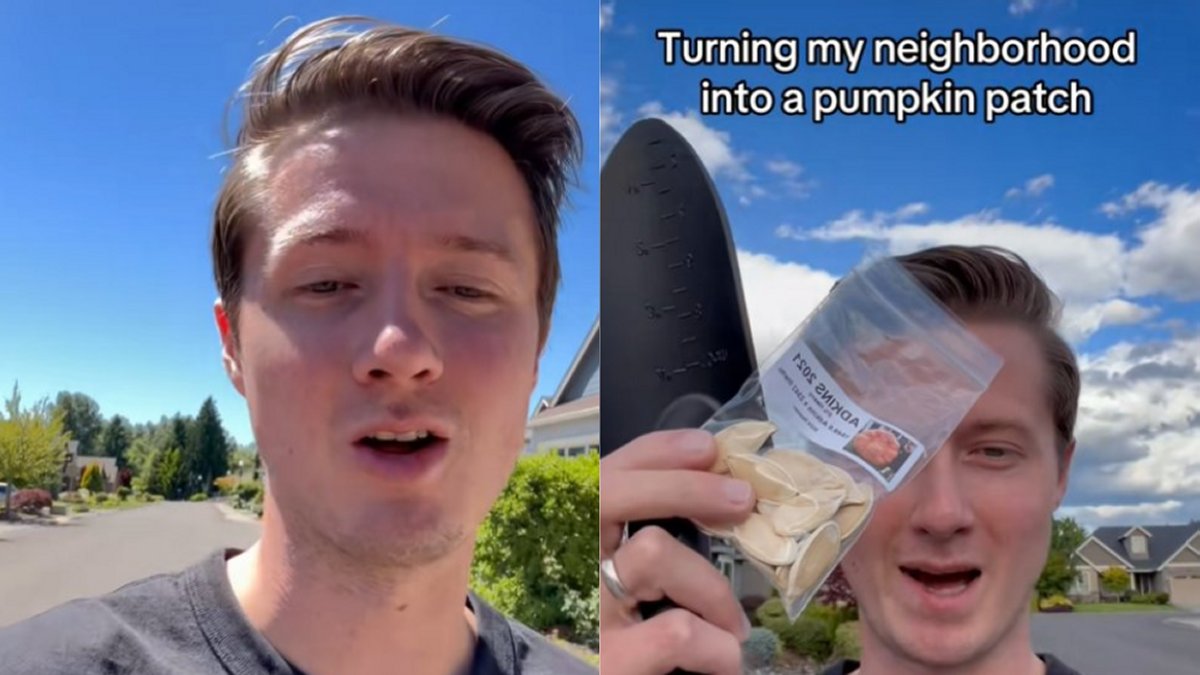
Oregon Man Strives To Turn Neighborhood Into Massive Pumpkin Patch With One Incredible Harvest: ‘Turning The Neighborhood into Halloween Town’

PORTLAND, Ore. — An unusual agricultural project is returning to the city streets of the Pacific Northwest, turning neglected public spaces and concrete cracks into an expansive, unauthorized community garden.
Portland, Oregon, digital content creator Andi Aston, widely known online as @andipdx on TikTok, has captivated millions of viewers after relaunching a viral guerrilla-gardening campaign to build a “neighborhood pumpkin patch” in urban areas. This effort marks a direct continuation of a creative experiment Aston first initiated six years ago, sparking fresh discussions regarding urban farming regulations, community land use, and the practical challenges of cultivating massive agricultural produce on public property.
A Six-Year Social Media Oregon Legacy Regrows
The roots of Aston’s current project date back to June 2020, when he published his first viral attempt at transforming city spaces. In the original 2020 TikTok video, Aston bought out local inventories of giant pumpkin seeds capable of growing over 100 pounds each. He planted them strategically across his neighborhood in dirt patches that featured automated public sprinkler systems to guarantee watering throughout the hot summer months.
Six years later, Aston has scaled up the initiative. His latest video documentation shows that his newest unauthorized patches have surpassed 67 days of intensive growth, showing massive green vines snaking down public paths and city infrastructure.
“Do you think they will grow?” Aston asked his audience in a seasonal update that quickly amassed over 600,000 likes, highlighting a multi-year fascination with decentralized, internet-driven greening projects.
“This is great. He’s turning the neighborhood into Halloween town,” one excited follower writes.
Another Portland resident told National Newsbase exclusively, “This is fun for the kids, and the entire neighborhood. With all the depressing news in the country it is great to hear that someone is doing something that will bring a little happiness.”
+--------------------------------------------------------------+

|             URBAN GUERRILLA GARDENING AT A GLANCE            |
+--------------------------+-----------------------------------+

| Project Architect        | Andi Aston (@andipdx)             |
+--------------------------+-----------------------------------+

| Historical Origin        | First attempted in June 2020      |
+--------------------------+-----------------------------------+

| Crop Variant             | Giant Pumpkin (Cucurbita maxima)  |
+--------------------------+-----------------------------------+

| Current Growth Timeline  | 67+ Days (Summer Season)          |
+--------------------------+-----------------------------------+

| Irrigation Method        | Public sprinklers & manual care   |
+--------------------------+-----------------------------------+
The Agronomic Reality of Urban Pumpkin Cultivation
While the aesthetic of bright orange gourds covering a city landscape appeals to social media spectators, agricultural experts emphasize that pumpkins require precise, intensive care to thrive. According to the Old Farmer’s Almanac, pumpkins are heavy feeders that typically require 90 to 120 days to mature fully, thriving best in full sun and well-drained soil rich in organic matter.
Successful pumpkin cultivation depends heavily on specific management techniques:
- Moisture Levels: Pumpkins require roughly one inch of water per week, distributed deeply at the soil level. Watering the foliage directly should be avoided, as stagnant dampness invites destructive fungal diseases and rot.
- Nutrient Delivery: Because they are heavy feeders, plants require high-nitrogen fertilizers during early vine growth, transitioning to high-phosphorus formulas just before the blooming period to encourage fruit set. Home gardeners also frequently utilize magnesium-rich supplements, such as Epsom salt applications, to prevent nutrient deficiencies.
- Root and Space Management: Pumpkin plants feature shallow root systems that are easily damaged by aggressive weeding. Furthermore, a single giant pumpkin vine requires significant square footage to spread out, making confined urban concrete setups structurally inhospitable without constant pruning.
Smashed Records: Giant Pumpkin History in Oregon and the U.S.
While Aston’s urban patch remains a casual community marvel, dedicated competitive growers push the agricultural biological limits of giant Atlantic pumpkins (Cucurbita maxima). According to historical logs tracked by KOIN 6 News and Yahoo Lifestyle, the official Oregon state record stands at an astonishing 2,469 pounds, grown by veteran cultivator Steve Daletas in 2018.
On a broader national scale, the United States record—which also briefly secured the world record title—reaches an immense 2,749 pounds, grown by Minnesota teacher Travis Gienger at the Safeway World Championship Pumpkin Weigh-Off, as detailed by Slate Magazine.
Is Guerrilla Gardening Legal? Municipal Boundaries and Laws
Despite the positive community sentiment surrounding Aston’s project, guerrilla gardening occupies a strict legal gray area and is generally classified as illegal under civil law. Cultivating plants on land without explicit permission from the property owner—whether private or municipal—constitutes civil trespass.
In local municipalities like Portland, right-of-way codes strictly regulate what can be planted on public sidewalks, medians, and curbsides. Landowners or local code enforcement officers hold the full legal right to remove unauthorized vegetation, a hurdle Aston encountered in previous iterations when some of his plants were cleared away by city gardeners.
Cities enforce these boundaries primarily due to structural liability. Sprawling vine networks can easily block public pedestrian walkways, creating accessibility violations under the Americans with Disabilities Act (ADA). Additionally, decomposing organic material from unharvested pumpkins can attract rodents, block stormwater systems, or introduce invasive pests into native urban ecosystems.
For those looking to participate legally, regional organizations like the Community Law Center recommend contacting city representatives to identify vacant public plots authorized for community farming, ensuring neighborhood beautification efforts remain fully compliant with local ordinances.