Viral TikTok Video Sparking Coast Guard Investigation Shows Michigan Man Adrift 12 Miles in Lake Michigan

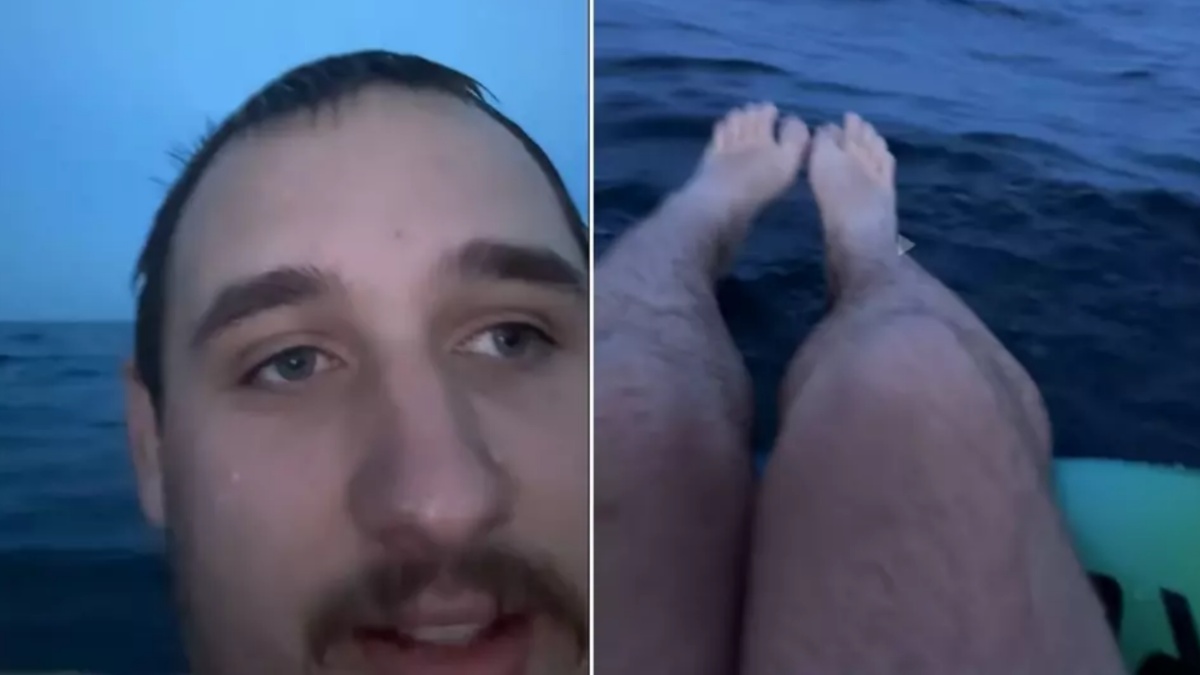
SOUTH HAVEN, Michigan — Federal maritime authorities are warning the public about the dangers of open-water drifting after a Michigan man’s viral TikTok video showed him floating roughly 12 miles offshore in Lake Michigan on a simple inner tube.
The clip, uploaded by user Jake McKinney (@91_Isvolvo), has rapidly amassed more than 11 million views, triggering widespread online debate and forcing a response from emergency rescue agencies.
While the video concludes with McKinney being safely towed back to land by a civilian vessel, officials emphasize that drifting deep into the Great Lakes without proper navigation or safety equipment can easily turn fatal.
The incident highlights a growing concern over dangerous social media stunts on open water. Read the full regional report on 97.9 WGRD.
Stranded at Sunset in Michigan
The incident began circulating on July 9, 2026, when McKinney posted a first-person video of himself clad in swimwear, sitting inside a lime-green inflatable tube. Visibly wet and entirely surrounded by open water, McKinney captured a vast expanse of Lake Michigan as the sun set on the horizon.
In the broadcast, McKinney estimated his location to be roughly 10 miles away from the coastal city of South Haven. He concluded the video with an unusual plea, asking his millions of viewers to somehow analyze the background imagery, calculate his coordinates, and send them back to him.
The following morning, McKinney posted a follow-up video showing a boat captain towing him back toward the mainland. According to McKinney, the operator who picked him up estimated that his tube had drifted 12 miles directly into open waters.
U.S. Coast Guard and Experts Respond
Though McKinney appeared calm throughout his posts, the sheer metrics of the stunt caught the attention of federal authorities. The U.S. Coast Guard Great Lakes Division issued a public statement via X (formerly Twitter) confirming they had established contact with McKinney and verified his safe return to land.
Safety advocates warn that Lake Michigan is notoriously deceptive for casual swimmers. Covering over 22,000 square miles, it is the third-largest Great Lake and experiences sudden meteorological changes, high-velocity wind patterns, and deadly rip currents that can rapidly overpower watercraft, let alone a pool float. For general open water protocols and watercraft laws, swimmers can review the U.S. Coast Guard Boating Safety Division.
| Great Lakes Statistics & Risks | Public Safety Context |
|---|---|
| Size and Scope | Lake Michigan’s vastness creates ocean-like conditions that confuse casual inner-tube drift distances. |
| Wind & Currents | Offshore winds can push inflatables away from coastlines faster than an individual can paddle. |
| Hypothermia Danger | Deep-water temperatures drop rapidly even during summer heatwaves, accelerating physical fatigue. |
Local authorities urge beachgoers to strictly remain within designated, lifeguard-monitored swimming zones. Venturing into open waters should only be attempted on registered motorized vessels or sailing ships operated by experienced mariners.
Prank or Real Peril?
Due to the lack of explicit technical data showing exactly how McKinney maintained cell service to publish the video, regional commentators note the video could potentially be an elaborate online prank. However, whether authentic or staged, maritime safety groups strongly condemn the footage due to the risk of copycat behavior.
The incident coincides with a broader uptick in regional water rescue deployments. Just last week, public safety teams conducted a massive four-hour tracking operation on the Au Sable River after a Flint, Michigan, man went missing while tubing. He was ultimately recovered in good condition.
Families and outdoor enthusiasts looking for certified water parameters can find regional swim site safety data through the Michigan Department of Environment, Great Lakes, and Energy (EGLE).